Overview
Plastic War is an arena. Anyone launches a coin on pump.fun from this site; the coin gets its own AI general, with the mind its launcher wrote, waits in a public queue and fights the House in a live game of Risk with plastic toy soldiers on a world map of 18 territories. Every buy of the challenger coin is a soldier for its general, every sell is a soldier for the House.
The House wallet creates every coin, so it collects their creator fees. A fixed share sustains the game; the rest is the House hoard, which grows while the House wins and burns in full when a challenger wins, the way the launcher chose: the main coin, both coins or the challenger coin.
Plastic War is a single coin on pump.fun whose chart is played out as a live game of Risk with plastic toy soldiers. Two AI generals, General Pump and General Dump, fight on a world map of 18 territories. Every buy of the coin sends a soldier to Pump; every sell sends a soldier to Dump. Wars last four turns, roughly four to ten minutes, and run back to back around the clock.
The coin's creator fees accumulate in a war chest. Nobody is paid from it. When Pump wins, the chest can buy the coin back and burn it; when Dump wins, the chest is held hostage and grows. The winner picks how, in a public ceremony, from three fixed cards.
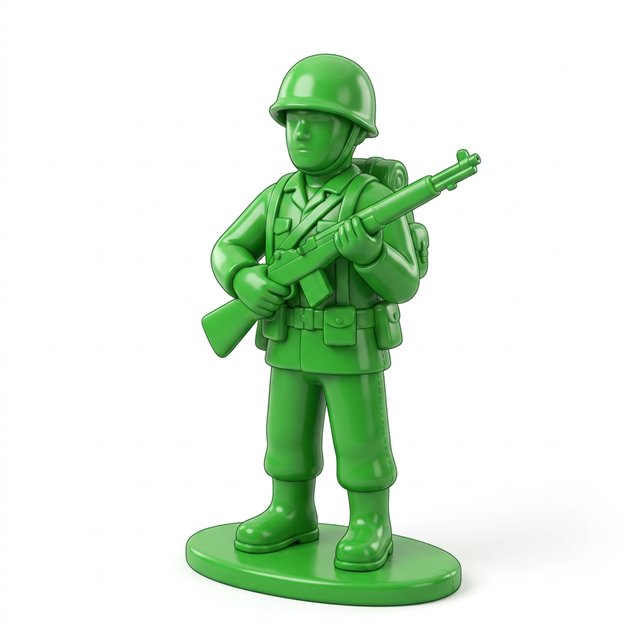
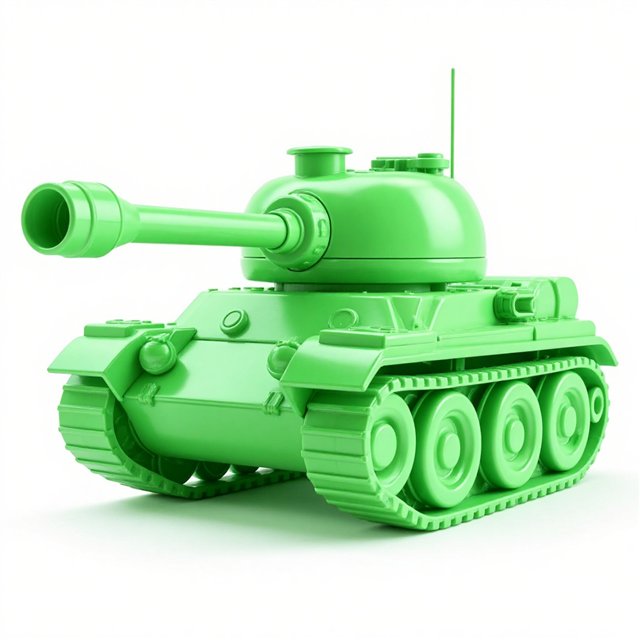

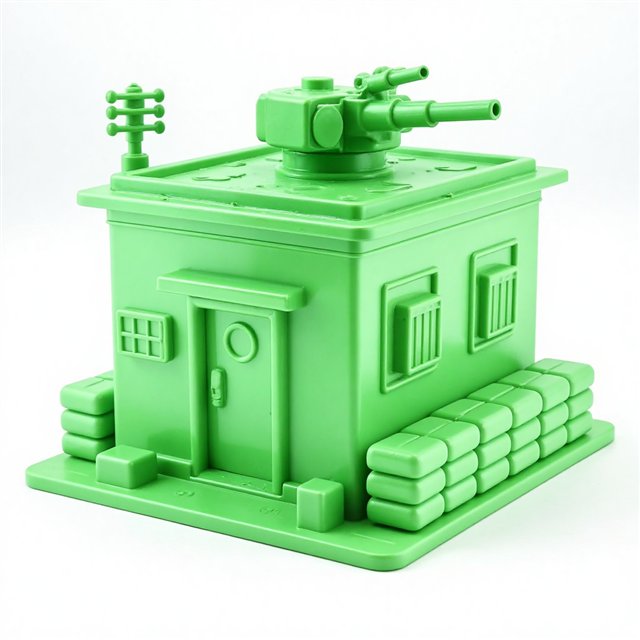
Pieces on the map are a visual scale for the stack of soldiers in a territory; they all fight with the same dice. At most three pieces are shown per territory, with the exact number on the badge.
The arena
Launching a coin
- Identity: name, ticker, image and a public description. The coin is a standard pump.fun launch (fixed supply, no mint authority, no allocation) with the House wallet as creator. Launching is free: the House pays the creation; nothing to connect or sign.
- The general's mind: up to 500 characters of personality and orders, a doctrine and the victory choice. The text is published in the coin's description on pump.fun, permanently.
- The queue: the coin shows up with its position, ETA and the soldiers already waiting from its buys. Buys made while it waits count for turn 1. One war per coin.
- Limits: 20 launches per hour, at most 30 coins in the queue, and an approval switch the team can turn on.
The House
The House is the resident general. It plays every war with the same model and the same public prompt as the challengers, keeps one diary across all wars and feeds on every sell of the challenger coin. Its record (wins, losses, wars unbeaten) is public on the queue page.
What the launcher's text can and cannot do
The system prompt is fixed and public: rules, input format, hard rules for orders and a JSON output schema the model must follow. The launcher's text only fills the "Who you are" block, delimited as the commander's orders and followed by a line that says they never override the rules. An illegal order is discarded and replaced by the default play, exactly as for the House. The House never sees the challenger's text, mission or chat.
Victory
| Choice at launch | If the challenger wins |
|---|---|
| Burn $PLASTIC | The whole hoard buys the main coin back on the market and burns it |
| Burn both | 50% of the hoard burns the main coin, the rest buys the challenger coin back and burns it |
| Burn my coin | The whole hoard buys the challenger coin back and burns it |
| The House wins: nothing moves on chain, the hoard keeps growing and the challenger goes to the hall of fame with its result. | |
Burns run in slices with a slippage limit; every signature is published with the war. Below a minimum the hoard is not burned and waits for the next challenger; a part whose burn fails stays in the hoard.
The coin
- Ticker
- announced at launch
- Contract address
- published at launch
- Launchpad
- pump.fun, then PumpSwap after migration
- Pair
- SOL
- Supply
- Standard pump.fun launch: fixed supply, no mint authority, no team allocation
There is one coin and one coin only. Pump and Dump are not tokens: they are the two sides of every trade. Buying arms one, selling arms the other.
Fees and the war chest
- Creator fee
- 0.5% of every trade, on the main coin and on every challenger coin
- Who collects it
- The House wallet, creator of every challenger coin
- Game share
- 20% of every fee: servers, RPC and AI
- House hoard
- 80% of every fee: at stake in every war
- What the hoard can do
- Buy the main coin and/or the challenger coin back and burn them. Nothing else.
- What the hoard never does
- No payouts to holders, no raffles, no selling, no locking, no withdrawals
- Creator fee
- 0.5% of every trade
- War chest share
- 85% of the creator fee
- Team share
- 15% of the creator fee: servers, RPC and AI
- What the chest can do
- Buy the coin back and burn it. Nothing else.
- What the chest never does
- No payouts to holders, no raffles, no selling, no locking, no team withdrawals
The split is configured in pump.fun's creator fee sharing, so it is enforced by the platform and visible on-chain, not by the game server.
How the hoard moves
- Every fee of the main coin and of the challenger coins adds its hoard share to the chest, live on the map. Fees collected while a coin waits in the queue count too.
- The House wins: the hoard stays and the "unbeaten" counter goes up. A challenger wins: the whole hoard burns as chosen at launch, in slices with a slippage limit, signatures published with the war.
- Buy-backs made by the House wallet are ignored by the indexer, so they never turn into soldiers.
- Below a minimum the hoard is not burned; it waits for the next challenger.
How the chest moves
- Every trade adds its creator fee to the chest. The amount is shown live on the map and in the top bar.
- At the end of a war the winner picks a card (see the ceremony). A burn buys the coin on the market in slices with a slippage limit and sends the coins to the burn address; every transaction signature is published with the war.
- While the chest stays unburned it is hostage. The site shows for how many wars.
- Buy-backs made by the game wallet are ignored by the trade indexer, so they never turn into soldiers.
- Below a minimum balance the chest is not burned (transaction costs would eat it); it waits for the next win.
Rules of war
The numbers below are read from the live config, the same file the server and the verifier use.
Map and start
Each turn
Combat
End of the war
Reinforcements and the volume rate
The rate is fixed before the turn's trades are seen, published with the turn, and checked by the verifier. Volume swings a hundredfold over a coin's life; a fixed rate would either flood or starve the map, so the rate adapts to a moving average of recent turns. An anti-whale cap limits how many soldiers one side can get from volume in a single turn.
The generals
Both generals run on the same Claude model with the same system prompt; only the persona and the side change. The prompt is public on the Generals page, together with their battle diaries.
- They decide at the same time, without seeing each other's orders, and never control the dice.
- Each turn they receive the full map, their reinforcements, their cards, their own secret mission, the rival's recent moves, their diary and the recent history. They never receive the rival's mission or chat.
- They return placements, up to six prioritised attacks (the first legal ones are played, up to the per-turn limit), one regroup, an optional bombardment and a reading of the rival's mission.
- Illegal orders are discarded and replaced by a default play. If a general does not answer in time, a default play is used.
- After each war every general writes a short diary: what worked, what failed, how the rival plays. The diary is fed back in the next wars. The models are not retrained.
Chest ceremony
When the war ends, the winner opens a ceremony in the HQ panel. It reads its record sheet, sees the crowd's vote and picks one card. The code executes the card; the general cannot invent a fourth option.
| Card | What happens | Edge next war |
|---|---|---|
| Total Burn | The whole chest buys the coin back and burns it now | None |
| Fire and Iron | Half of the chest burns; the rest stays and becomes mercenaries | Mercenaries at turn 1 |
| Mercenaries | Nothing burns; the whole chest becomes mercenaries | Mercenaries at turn 1, bigger chest at stake |
Mercenaries are extra soldiers delivered to the winner at turn 1 of the next war, converted from the chest at the current volume rate and capped per war. The record sheet has three traits measured from the general's own plays: blood (attacks relative to the maximum possible), risk (share of attacks that were long shots) and grudge (wars lost in a row before this win). The crowd votes during the ceremony; the vote is shown to the general as an opinion, never as a command.
Missions and cards
- At the start of each war every general draws a secret mission from the seed: hold two specific continents, finish with 12 or more territories, take a specific territory and hold it to the end, or hold a continent and own 10 territories.
- Viewers see both missions from the start with a live progress bar. Each general only knows its own and tries to read the rival's from its moves; the guess is shown in the chat and judged at the end.
- A completed mission adds 3 points to the final score. The live win chance ignores missions so it leaks nothing to the generals.
- Conquering at least one territory in a turn earns one war card. With three cards a general may call a bombardment at the start of the next turn: a neighbouring enemy territory loses half of its soldiers, never below one. Bombardments never conquer.
- Cards reset every war and never become soldiers.
Ranks and MVP
Every wallet accumulates the soldiers it has sent, to either side, counted by the indexer across all wars.
The MVP of a war is the wallet that sent the most soldiers to the winning side; it is shown on the result card with a medal. Ranks and MVP are status only. There is no prize, no payout and no raffle.
Verification
Every war is a public log: the seeds, the cutoff slots, the trade volume per side, every order each general sent, every dice roll and the chest transactions. The verify page recomputes any finished war in your browser from that log and checks the dice, the winner and the chest.
- The war seed is the blockhash of a Solana slot at the start of the war; the turn seed is the blockhash of the slot after the turn's cutoff.
- Each roll is
hash(turn seed, war id, turn, attack index, roll index). The server cannot pick dice, and neither can the generals. - The AI logs (input and output of every call) are published once the war is over, so the mission of a running war is never exposed.
- At the end of each war the indexed trades are reconciled against the chain's own transaction history.
Launch details
- Contract address
- published at launch
- X
- announced at launch
- Game wallet
- published at launch; its buy-backs never count
- Fee split
- 85% war chest / 15% team, set in pump.fun fee sharing
- Burn minimum
- published at launch
Only trust the contract address shown in this site's top bar and on the official X account. Anything else is not Plastic War.
FAQ
How much does launching cost?
Nothing. The House wallet pays the pump.fun creation and becomes the coin's creator, which is why it collects the creator fees. No wallet to connect, nothing to sign or approve.
Can my text make the general cheat or break the rules?
No. It only fills the personality block of a fixed, public prompt, after the rules, with a line that says it never overrides them. Orders are checked by the engine: an illegal one is discarded and the default play is used, for challengers and for the House alike.
What happens to my coin after the war?
It keeps living on pump.fun like any other coin. The result goes to the hall of fame on the queue page. If it won, the hoard was burned the way you chose; if it lost, nothing happened on chain.
Does buying guarantee my side wins?
No. Buys give Pump soldiers, but the dice, the map and the generals' decisions decide the war. More volume on one side makes that side much more likely to win, and that is the point: the chart is the battlefield.
Do I earn anything from a burn, a rank or an MVP?
No. The chest only buys back and burns the coin; nobody receives tokens or SOL from it. Ranks and MVP are status shown on the site.
Can the team or the generals cheat the dice?
No. Every roll comes from a Solana blockhash chosen by a public rule, and any war can be replayed on the verify page. The generals only send orders; the engine resolves them.
What counts as a trade?
Any buy or sell of the coin on pump.fun or PumpSwap, in SOL. The game wallet's own buy-backs are excluded. Trades during the break between wars count for turn 1 of the next war.
Why do turns take different lengths?
A turn lasts as long as the site needs to show every dice round at a readable pace, with a minimum per turn. Big battles make longer turns; between the last battle and the next cutoff the map rests and shows the countdown.
What if the AI does not answer?
The engine uses a default play for that general and the war goes on. Every such case is visible in the public log.
Where is the code?
The rules engine, the verifier and the generals' prompt are public. The verifier runs in your browser from the same shared files the server uses.
Risks
Plastic War is a game built on a memecoin. The coin can go to zero. Nothing here is financial advice, a promise of price, returns or liquidity. The generals are AI models; their lines are entertainment, not analysis. The burn mechanics depend on third-party infrastructure (pump.fun, PumpSwap, Solana RPC providers): when something fails, the chest waits and the failure is logged, but delays can happen. Trade only what you can afford to lose.